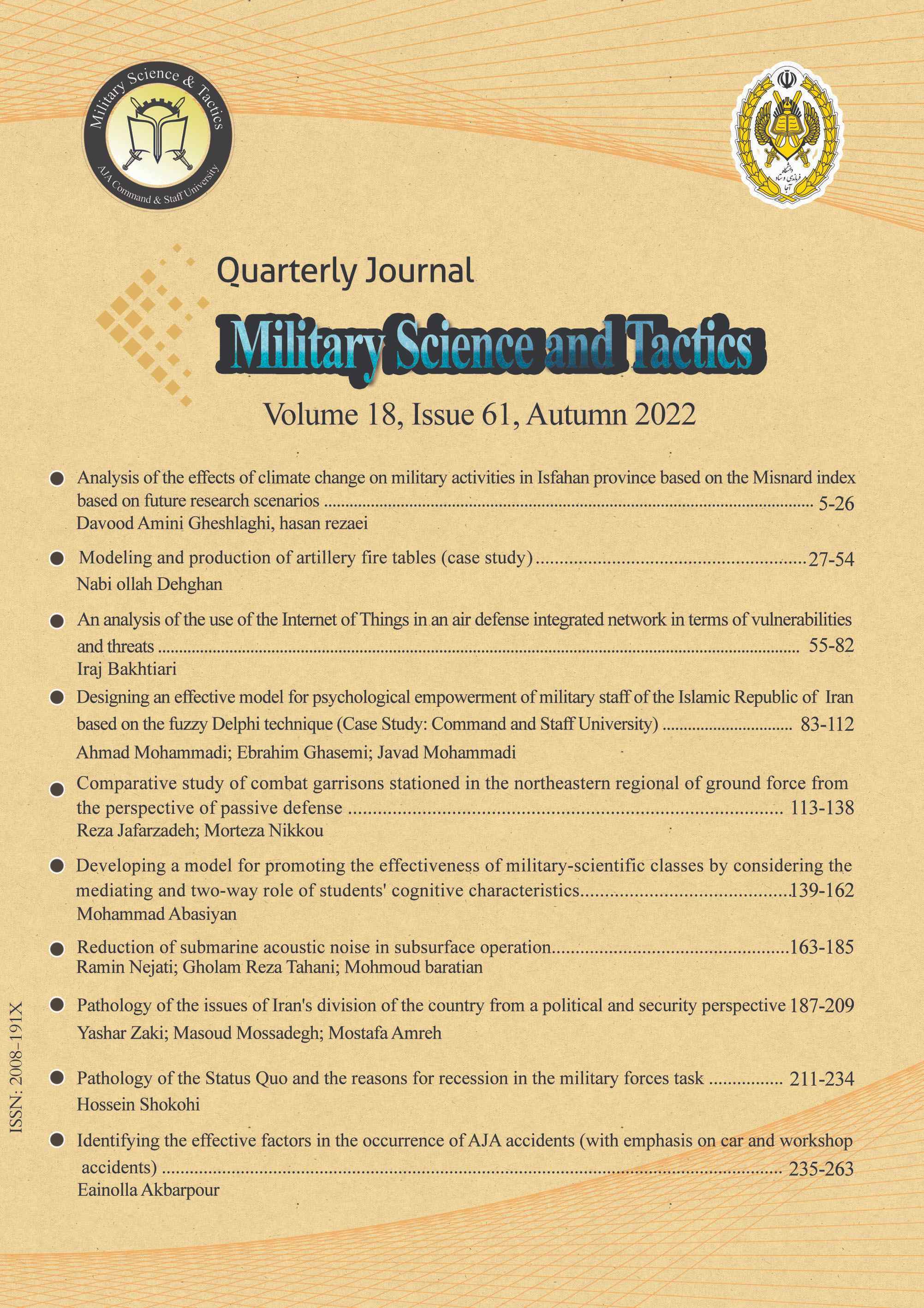
According to the Supreme Leader of the Muslims, stopping and abandoning the works will stop the progress of the country, which the armed forces are no exception in this regard. The stagnation in progress, leavingsome of the plans abandon, the lack of success of some of them in the organizational vital artery in the country like the armed forces is not acceptable and avoiding it is inevitable.In this study, the problemhas been focused. The purpose of this research is pathology of the status quoand identifying the causes of the reasons for recession in the military forces tasks. This research is an applied one. The research method has been used from exploratory and exploratory approaches. The sample population of this research is determined by using purposeful sampling method at the level of each organization and its subordinating forces.The results of the research include the weakness of project management and workabandonment before the results are realized; the incorrect use of resources, requirements and instruments, weaknesses in the delegation of authority. Concerning the effective damage to the progress one may point to such matters: weakness of commitment and expertise and reduction of motivation and belief, strategic weakness of the time management and affairs, and the low level of innovation and creativity.
خسروجردی، علی. (1380). ارایه یک مدل جهت ارزیابی عملکرد واحدهای فروشگاه زنجیرهای رفاه درسطح کشور، پایاننامه کارشناسی ارشد مدیریت صنعتی، تهران: دانشگاه تهران.
رحمانی، پرویز و لنکرانی، مسعود. (1387). کنترل و نظارت در مدیریت از دیدگاه نهجالبلاغه، تهران: حدیث امروز.
صالحاصفهانی، اصغر. (1387). الگوی مدیریت راهبردی نیروهای مسلح جمهوری اسلامی ایران، تهران: دانشگاه عالی دفاع ملی، دانشکده دفاع ملی.
صانع، محمد و موحد نصب، حامد. (1394). جایگاه و نقش نظارت و بازرسی در ارتقای سلامت اداری و مبارزه با فساد اداری، فصلنامۀ دانش ارزیابی. 7 (25): 21-1.
صفرزاده، حسین و قریشی، معصومه. (1390). نقش به کارگیری سامانه مدیریت فرآیند کسبوکار در بهبود عملکرد سازمانها، نشریة رشد فناوری. 7 (26): 53-47.
عالم تبریز، اکبر؛ رجبیپور، علیرضا و زارعیان، محمد. (1388). بررسی کارکرد تکنیک تاپسیس فازی در بهبود سنجش کارایی شعب بانکها با استفاده از تکنیک تحلیل پوششی دادهها، نشریه مدیریت صنعتی. 1 (3): 118-99.
قرآن کریم.
گروه مطالعات شهید همت. (1395). تبیین الزامات تداوم و پیشرفت کارها در نیروهای مسلح، تهران: دانشگاه عالی دفاع ملی.
محسنشیخی، علیاصغر. (1390). نظارت و بازرسی، قم: زمزم هدایت.
مزینانی، محمد. (1391). مدیریت سازمانها، تهران: دانشگاه آزاد واحد جنوب.
منتظری، ایمان و فراهانی، مجید. (1385). مدل بلوغ سازمانی مدیریت پروژه، تهران: آسیا.
Shokohi, H. (2022). Pathology of the Status Quo and the reasons for recession in the military forces task. Military Science and Tactics, 18(61), 199-218. https://doi.org/10.22034/qjmst.2022.539293.1590
MLA
Shokohi, H. "Pathology of the Status Quo and the reasons for recession in the military forces task", Military Science and Tactics, 18, 61, 2022, 199-218. doi: 10.22034/qjmst.2022.539293.1590
HARVARD
Shokohi H. (2022). 'Pathology of the Status Quo and the reasons for recession in the military forces task', Military Science and Tactics, 18(61), pp. 199-218. doi: 10.22034/qjmst.2022.539293.1590
CHICAGO
H. Shokohi, "Pathology of the Status Quo and the reasons for recession in the military forces task," Military Science and Tactics, 18 61 (2022): 199-218, doi: 10.22034/qjmst.2022.539293.1590
VANCOUVER
Shokohi H. Pathology of the Status Quo and the reasons for recession in the military forces task. Military Science and Tactics. 2022;18(61):199-218 (In Persian). doi: 10.22034/qjmst.2022.539293.1590