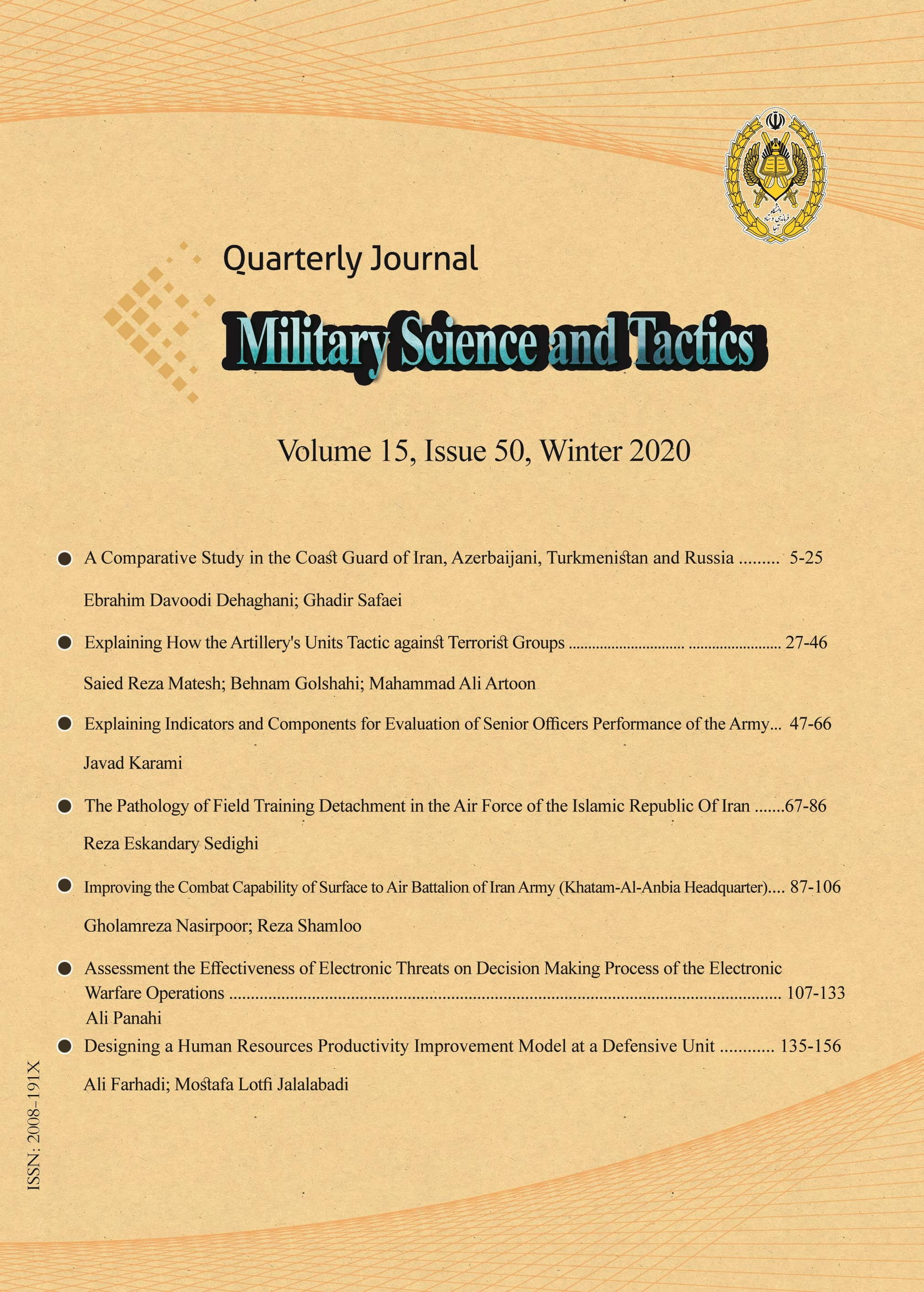
Armed Forces is an institution that provides security, stability, peace and protection of the fundamental values and vital interests of the nation and the establishment of public order for the community, accordingly, should be in the best possible operating conditions. One of the influential factors is the manpower that, if it is of high productivity, will increase the combat power. The present study investigates the most important factors affecting the productivity of manpower. This research is applied in terms of purpose and in terms of collecting information, descriptive-survey data and in terms of data type is small. The statistical population of the study consisted of all staff members of one of the defensive units. Using simple random sampling method and sample size, 160 people were selected using Cochran method with limited population. After designing and determining the validity and reliability of the questionnaire (89), a structural equation model was used to analyze the data using the Smirnov and Kolmogorov tests. Based on the findings of the prioritization of the factors affecting the productivity of manpower, there are: 1- Management factors 2- Organizational factors 3- Individual factors and finally, suggestions are presented.
ابیلی، خدایار و همکاران (1393)، بررسی عوامل مؤثر بر بهرهوری منابع انسانی دانشگر شرکت ملی نفت ایران، مدیریت منابع انسانی در صنعت نفت، سال ششم، شماره 19: 160-131.
اعتضادی، شکوفه (1396)، بررسی عوامل مؤثر برافزایش بهرهوری نیروی انسانی در شرکت برق، دوازدهمین کنفرانس ملی کیفیت و بهرهوری، 12 اسفندماه.
اعظم وزیری، سرور، منصوری، حسین و ادیبان، احمد (1388)، شناسایی و اولویتبندی عوامل مؤثر بر بهرهوری نیروی انسانی با استفاده از تکنیکهای MADM، فصلنامه تعلیم و تربیت، شماره 100: 159-135.
افروزنیا، علی و توکلی، عبدالله (1395)، بررسی تطبیقی بهرهوری نیروی کار در ایران، پژوهشهای مدیریت منابع انسانی دانشگاه جامع امام حسین (ع) سال هشتم، شماره 4: 125-105.
آقائی، رضا، آقائی، میلاد، آقائی، اصغر (1394)، بررسی عوامل مؤثر بر بهرهوری نیروی انسانی با استفاده از مدل BSC، پژوهشهای مدیریت منابع انسانی دانشگاه جامع امام حسین (ع) سال هفتم، شماره 4: 49-27.
بردران، وحید و ولیجانی، مریم (1394)، بررسی عوامل مؤثر بر ارتقاء بهرهوری نیروی انسانی در سازمان امور مالیاتی کشور، پژوهشنامه مالیات، شماره بیست و نهم: 184-165.
جعفری، امیر و معمار زاده تهران، غلامرضا (1396)، شناسایی مؤلفههای مؤثر بر بهرهوری کارکنان در یک سازمان بهداشت و درمان نظامی، مجله طب نظامی، دوره 19، شماره 3: 144-134.
حیدری، نظر (1393)، بررسی عوامل مؤثر بر توانمندسازی و بهرهوری منابع انسانی، اولین کنفرانس اقتصاد و مدیریت کاربردی با رویکرد ملی، بابلسر.
زمانی، هادی؛ مؤمنی فرد، حسین و پرتوی، محمدتقی (1398)، عوامل مؤثر بر توانایی افسران گردانهای پدافند هوایی نیروی زمینی ارتش ج.ا.ا، فصلنامه علوم و فنون نظامی، سال پانزدهم، شماره 47: 142-125.
ستاری، راویه و اصلانی، عظیم (1393)، بررسی رابطه بین توانمندسازی و بهرهوری کارکنان سازمان تأمین اجتماعی استان اردبیل، پایاننامه کارشناسی ارشد دانشگاه آزاد اسلامی واحد گرمسار.
شجاعی، سید سعید و همکاران (1395)، شناسایی عوامل مؤثر بر بهرهوری منابع انسانی، فصلنامه پژوهشهای مدیریت منابع انسانی دانشگاه جامع امام حسین (ع) سال هشتم، شماره 2: 181-161.
طالب لو، مریم (1396)، نقش توانمندسازی کارکنان در ارتقا بهرهوری منابع انسانی، دومین کنفرانس سالانه اقتصاد،مدیریت و حسابداری، اهواز، دانشگاه شهید چمران - سازمان صنعت و معدن و تجارت خوزستان.
طاهر، بیتا (1394)، بررسی عوامل مؤثر بر بهرهوری نیروی انسانی، ماهنامه اجتماعی، اقتصادی، علمی و فرهنگی کار و جامعه، شماره 190: 71-58.
مبینی دهکردی، الهه و ابراهیمی، مسیح (1395)، تحلیل نقش نظام ارزشیابی عملکرد در بهرهوری سازمان با استفاده از نظریه داده بنیاد، پژوهشهای مدیریت منابع انسانی دانشگاه جامع امام حسین (ع) سال هشتم، شماره 3: 81-59.
مردانی شهر بابک، محمد و خاکی، ابوذر (1398)، ارائه الگوی بهرهوری کارکنان دانشگاههای نیروهای مسلح با تأکید بر نقش فناوری اطلاعات و ارتباطات، فصلنامه پژوهشهای مدیریت منابع انسانی دانشگاه جامع امام حسین (ع) سال یازدهم، شماره2: 189-167.
مهرابیان، فردین و همکاران (1390)، تعیین عوامل ارتقاء بهرهوری نیروی انسانی از دیدگاه اعضای هیئتعلمی و غیر هیئتعلمی دانشگاه علوم پزشکی گیلان. پژوهش در آموزش علوم پزشکی. سال سوم، شماره 2 : 58-63.
میر محمد صادقی، سید علیرضا و همکاران (1397)، شناسایی و رتبهبندی کارکردهای بهرهوری کارکنان، فصلنامه پژوهشهای مدیریت منابع انسانی دانشگاه جامع امام حسین (ع) سال دهم، شماره 4: 258-223.
میرکمالی، سید محمد؛ مصطفی قنبری و مریم صمیمی پطروی (1393)، بررسی رابطه توانمندسازی و بهرهوری نیروی انسانی کارکنان سازمان تنظیم مقررات و ارتباطات رادیویی(معاونت نظارت و اعمال مقررات)؛ نخستین همایش ملی علوم تربیتی و روانشناسی، مرودشت.
نصرت پناه، سیاوش و همکاران (1391)، بررسی رابطه بین کیفیت زندگی کاری و بهرهوری نیروی انسانی، دو فصلنامه پژوهشهای مدیریت منابع انسانی دانشگاه جامع امام حسین (ع) سال چهارم، شماره 1: 206-189.
هاشمی، محسن و دلخواه، جلیل (1394)، تعیین تأثیر استراتژی مدیریت استعدادها بر تعلقخاطر کارکنان شهرداری کرج، پایاننامه کارشناسی ارشد دانشکده مدیریت و اقتصاد دانشگاه تربیت مدرس.
Amirchehrazi, K., & Shafizadeh, R. (2016). The relationship between empowerment and the productivity of employees of education system. International Journal of Research in Organizational Behavior and Human Resource Management, 4(1), 115-124.
Appelbaum, S. H. Karasek, R. Lapointe, F. & Quelch, K. (2015). Employee empowerment: factors affecting the consequent success or failure (Part II). Industrial and Commercial Training, 47(1), 23-30.
Berraies, S., & Hamouda, M. (2018). Investigating the Impact of Assessing the Performance of Employees on the Empowerment and Employability of Work in American Insurance Companies. International Journal of Bank Marketing, 36(2), 336-356.
Cho, S.; Woods, R. H.; Jang, S., & Erdem, M. (2006). Measuring the impact of human resource Management practices on hospitality firms' performance, Hospitality Management, 25, 262-277.
De Brito, R.P., Oliveira, L.B. (2016). The Relationship between Human Resource Management and Organizational Performance. Brazilian business review, 13(3): 90-110.
Jung,Hyo Sun؛ Yoon,Hye Hyun .(2015) Understanding pay satisfaction: The impacts of pay satisfaction on employees’ job engagement and withdrawal in deluxe hotel; International Journal of Hospitality Management; Volume 48, July 2015, Pages 22–26
Martin, L.A., Madhok, A., Sanchez, A.M.(2014). The evolution of strategic management research: Recent trends and current directions.BRQ Business Research Quarterly, 17(2):69-76.
Phillips, F., Hsieh, C. H., Ingene C. Golden, L (2016). Business schools in crisis. Journal of Open Innovation: Technology, Market, and Complexity, 2(10): DOI: 10.1186/s40852-016-0037-9.
Sanchez M.E (2016) A Study of the Relationship between Manpower Productivity and the Empowerment of Ford German Employees. Journal of Clinical Oncolology; 19(1):260-4
Susan L (2016) the Effect of Manpower Efficiency on the Empowerment of the Employees of the Manufacturing Companies in France Journal of Academic Medicine; 69(2), PP. 89-102.
Tavari, M.; Sokhakeian, M., & Mirnejad, S. (2008). Identification and prioritize the factors affecting the productivity of human resources with MADM technique. Journal of Industry Management, 1(1).71-88. (in Persian)
Farhadi,A. and Lotfi Jalalabadi,M. (2020). Designing a Human Resources Productivity Improvement Model at a Defensive Unit. Military Science and Tactics, 15(50), 135-156. doi: 10.22034/qjmst.2020.38957
MLA
Farhadi,A. , and Lotfi Jalalabadi,M. . "Designing a Human Resources Productivity Improvement Model at a Defensive Unit", Military Science and Tactics, 15, 50, 2020, 135-156. doi: 10.22034/qjmst.2020.38957
HARVARD
Farhadi A., Lotfi Jalalabadi M. (2020). 'Designing a Human Resources Productivity Improvement Model at a Defensive Unit', Military Science and Tactics, 15(50), pp. 135-156. doi: 10.22034/qjmst.2020.38957
CHICAGO
A. Farhadi and M. Lotfi Jalalabadi, "Designing a Human Resources Productivity Improvement Model at a Defensive Unit," Military Science and Tactics, 15 50 (2020): 135-156, doi: 10.22034/qjmst.2020.38957
VANCOUVER
Farhadi A., Lotfi Jalalabadi M. Designing a Human Resources Productivity Improvement Model at a Defensive Unit. Military Science and Tactics, 2020; 15(50): 135-156. doi: 10.22034/qjmst.2020.38957