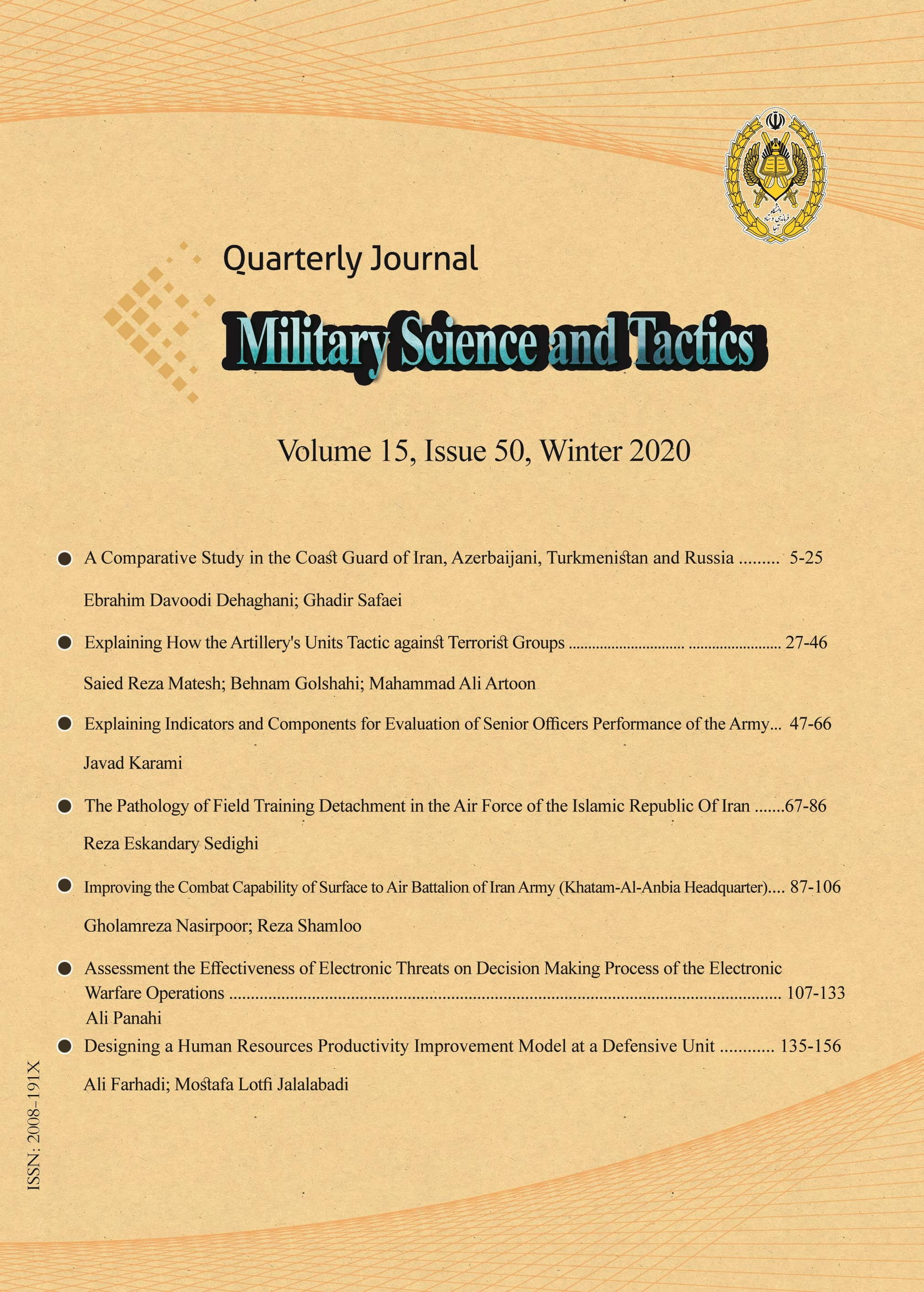
Today, one of the most critical, most important, and in fact inevitable organizational issues to survive, stay competitive and improve performance, is to properly perform employee performance appraisals and gain feedback and then impact the results on reform. It is relevant. The purpose of this research is to explain and prioritize the dimensions and components of the performance appraisal system of senior officers. In this way, the researcher seeks to answer the question of what priority are the components and indicators of the performance evaluation of the infantry officers. This research is a descriptive and case-based approach in the squatter community. The results show that physical fitness and mental health are the first priority and evaluation tariffs are the last priority.Today, one of the most critical, most important, and in fact inevitable organizational issues to survive, stay competitive and improve performance, is to properly perform employee performance appraisals and gain feedback and then impact the results on reform. It is relevant. The purpose of this research is to explain and prioritize the dimensions and components of the performance appraisal system of senior officers. In this way, the researcher seeks to answer the question of what priority are the components and indicators of the performance evaluation of the infantry officers. This research is a descriptive and case-based approach in the squatter community. The results show that physical fitness and mental health are the first priority and evaluation tariffs are the last priority.
سید نقوی میرعلی، فرهادی علی، ارزیابی عملکرد سازمانی از منظر نهجالبلاغه ، فصلنامه پژوهشنامه نهجالبلاغه، 1395
طبرسا غلامرضا، (1378)، بررسی و تبیین نقش اقتضائات استراتژیک در انتخاب الگوی ارزیابی عملکرد سازمانهای دولتی، همایش ارزیابی عملکرد دستگاههای اجرایی کشور، کمیسیون ارزیابی عملکرد، تهران.
فرزیان پور فرشته، مکانیسم کنترل ارزیابی عملکرد، مقاله ارائه شده جهت جشنواره خوارزمی سال1379.
فصلنامه علمی ترویجی نظارت و بازرسی، بازرسی کل ناجا،1392، قابلدسترس در si.jrl.police.ir.www
فقهی فرهمند ناصر، مدیریت در ایران، 1381
کیذوری امیرحسین، سیستم اثربخش ارزشیابی عملکرد کارکنان؛ مبانی ، رویکردها و روشها، مقاله رائه شده در کنفرانس ملی پژوهش های نوین ایران و جهان در روانشناسی،علوم تربیتی و مطالعات اجتماعی 1394
گزارش فاز اول طرح"بررسی و تبیین موانع و مشکلات اجرایی ارزیابی عملکرد در دستگاههای اجرایی کشور"، معاونت امور مدیریت و منابع انسانی، دفتر ارزیابی عملکرد مدیریت، 1380.
میرعلی سید نقوی و علی فرهادی، ارزیابی عملکرد سازمانی از منظر نهجالبلاغه ، فصلنامه پژوهشنامه نهجالبلاغه، 1395
نشریه آموزشی و راهنمای اجرای ماده 42 قانون آجا، معاونت طرح و برنامهوبودجه آجا، 1386
ویژگیهای نظام ارزیابی عملکرد ناجا مبتنی بر دیدگاه مقام معظم رهبری (مدظلهالعالی)، فصلنامه علمی ترویجی نظارت و بازرسی، 1392
Ivancevich, J. M. (2013). Human Resource Management. New York: Mc GrawHill
Byars, L.I & Rue, L.W. (2013). Human Resource Management: 9 th Edition. New York: Mc
Snell, S. A & Bohlander, G. W. (2014). Managing Human Resources. Thomson
Noe, R.A (2008). Human Resource Management: gaining Competitive advantage. New York: Mc GrawHill
Bernardin, H.J (2014). Human Resource Management. New York: McGraw Hill Higher Education
Karami,J. (2020). Explaining indicators and components for evaluation of senior officers performance of NEZAJA. Military Science and Tactics, 15(50), 47-66. doi: 10.22034/qjmst.2020.38951
MLA
Karami,J. . "Explaining indicators and components for evaluation of senior officers performance of NEZAJA", Military Science and Tactics, 15, 50, 2020, 47-66. doi: 10.22034/qjmst.2020.38951
HARVARD
Karami J. (2020). 'Explaining indicators and components for evaluation of senior officers performance of NEZAJA', Military Science and Tactics, 15(50), pp. 47-66. doi: 10.22034/qjmst.2020.38951
CHICAGO
J. Karami, "Explaining indicators and components for evaluation of senior officers performance of NEZAJA," Military Science and Tactics, 15 50 (2020): 47-66, doi: 10.22034/qjmst.2020.38951
VANCOUVER
Karami J. Explaining indicators and components for evaluation of senior officers performance of NEZAJA. Military Science and Tactics, 2020; 15(50): 47-66. doi: 10.22034/qjmst.2020.38951